
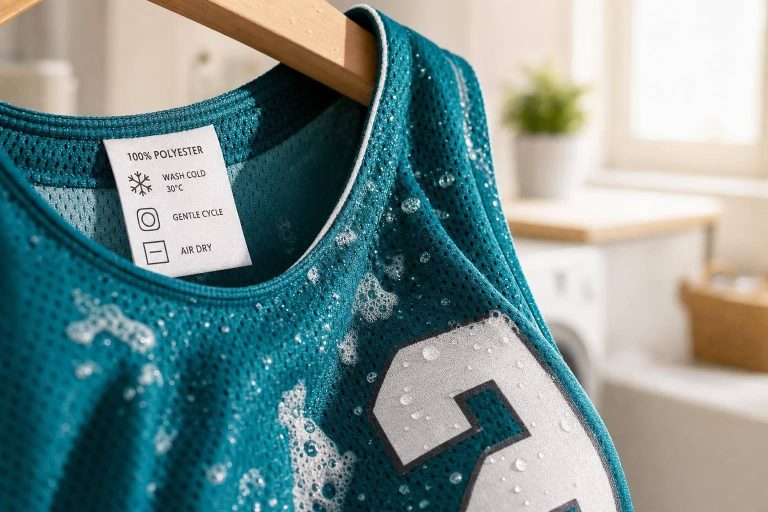
If a synthetic jersey still smells after washing, the fix is usually simple: use cold water, a gentle cycle, mild detergent, and low or no heat when drying. Polyester can hold onto sweat and body oil more than many other fabrics, which is why odor can stick even after one wash.
Here’s the short version:
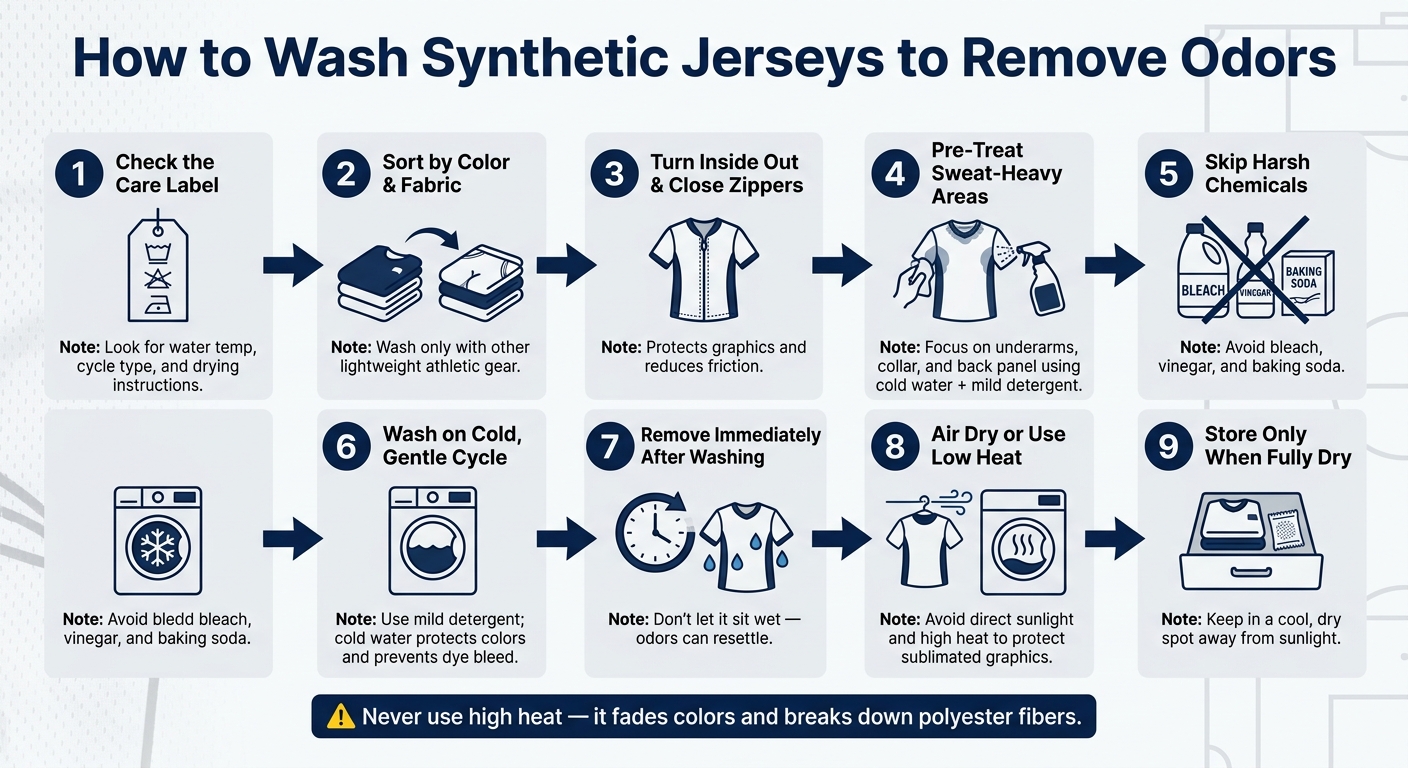
- Check the care label first
- Turn the jersey inside out
- Wash with other lightweight athletic gear
- Pre-treat underarms, collar, and back panel with cold water and mild detergent
- Skip bleach, vinegar, and baking soda
- Use a cold, gentle cycle
- Take it out right after washing
- Air dry when possible
- Store it only when fully dry
A few small steps can help cut odor, protect printed numbers and logos, and lower wear from heat and friction. If I were cleaning team jerseys after a game, this is the routine I’d follow every time.
Bottom line: treat synthetic jerseys gently, dry them fully, and don’t let them sit damp in a bag or washer.
How to Wash Synthetic Jerseys: Step-by-Step Guide
How to Get the Stink out of Workout Clothes
sbb-itb-4d95ad3
How to prepare a synthetic jersey before washing
A little prep goes a long way here. It helps the wash cut through sweat and odor without putting extra wear on the fabric.
Check the care label and fabric details first
Start with the care label. That’s your best guide for safe water temperature, the right cycle, and drying instructions. If the custom football uniforms have sublimated graphics or printed numbers, those details matter even more.
You’ll often see directions like cold water, a gentle cycle, and air drying or low heat. Skip bleach and other harsh chemicals. They can damage sublimated graphics and lead to color bleed.
Once you know what the label says, sort the jersey by color and fabric type.
Sort by color and fabric thickness
Sort by color, and wash the jersey only with other lightweight athletic items. That helps cut down on rubbing, snags, and extra wear from heavier clothes.
Turn the jersey inside out and close all zippers
Before the jersey goes into the washer, turn it inside out and close any zippers. That helps protect the graphics and cuts down on friction during the wash.
How to treat strong odors before the wash cycle
Once you’ve done the basic prep, deal with the spots that trap the most sweat before the main wash. If the smell is strong, give those sweat-heavy areas a little extra attention first.
Pre-soak sweat-heavy areas before washing
Start with the underarms, collar, and back panel. Those are usually the first places where odor settles in and hangs around.
Rinse or soak the underarms and back panels in cold water, then rub in a small amount of mild detergent. That helps loosen sweat and odor before the jersey goes into the wash.
Skip harsh pre-soaks and use mild detergent instead
With synthetic jerseys, it’s best to skip vinegar, baking soda, and bleach. They can be too harsh for the fabric.
Use cold water and a mild detergent instead to help remove odor without damaging sublimated graphics.
How to wash synthetic jerseys on a cold, gentle cycle
After you pre-treat the sweat-heavy spots, put the jersey right into the washer. That step helps loosen sweat and odor, and the wash cycle clears it out before it has a chance to hang around.
Use cold water and a gentle cycle
For synthetic jerseys, cold water is the way to go. It helps protect sublimated colors and lowers the chance of dye bleed. Use a cold, gentle cycle with a mild detergent, and skip bleach or any harsh additives.
When the cycle ends, take the jersey out right away and move it to drying. If it sits wet in the washer, odors can settle back into the fabric.
How to dry synthetic jerseys and keep odors from coming back
Air dry or use low heat only
When the wash cycle ends, air drying is the safest option. Hang the jersey up or lay it flat in a cool, shaded area and let it dry on its own. Skip direct sunlight, since it can fade sublimated colors.
If you need the dryer, check the care label first and use the lowest heat setting allowed. Wooter puts it plainly: "High temperatures can cause the colors to fade or bleed, compromising the uniform’s appearance." Heat can also wear down polyester fibers and printed graphics.
Store clean, dry jerseys and wash them soon after use
As soon as the jersey is fully dry, put it away. A damp jersey left in a gym bag is basically an open invitation for odors to creep back in. If you can’t wash it right after a game or practice, hang it up somewhere with airflow so it can dry out first.
Keep jerseys in a cool, dry spot away from sunlight and heat. Try not to fold them across sublimated graphics, since that can leave permanent creases.
FAQs
Why do synthetic jerseys still smell after washing?
Synthetic jerseys tend to hang on to odors because sweat and bacteria get stuck in the fibers. And fabric softeners often make the problem worse. They can clog the material and weaken its moisture-wicking and odor-control performance.
To get rid of lingering smells, wash the jersey with an enzyme-based detergent made for athletic fabrics. If the odor won’t budge, soak it for 30 minutes in a mix of 1 cup water, 1 cup white vinegar, and 1 tablespoon baking soda before washing.
What if my jersey still smells after one wash?
If your jersey still smells after one wash, skip high heat and harsh chemicals. They can damage the fabric and the graphics.
Instead, wash it again in cold water with a mild detergent, and turn it inside out first. Don’t use fabric softener. If the odor still sticks around, switch to a detergent made to fight odors and bacteria in high-performance sportswear.
Can I put a synthetic jersey in the dryer?
Air drying is the best way to help your synthetic jersey keep its shape, color, and overall condition.
If you need to use a dryer, stick with a low-heat setting and take the jersey out while it’s still slightly damp. High heat can fade colors, damage the fabric or graphics, make the material less breathable, and even set stains.