
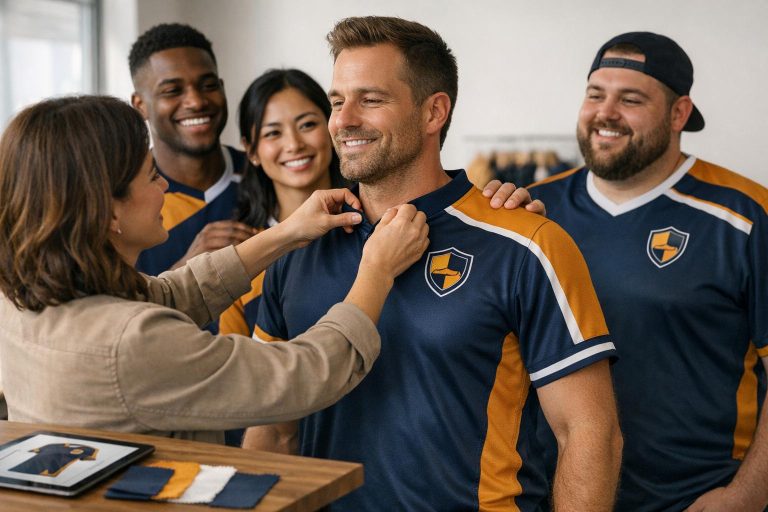
Uniforms are more than just clothing – they’re a visual representation of a team’s identity, values, and shared goals. By reflecting a team’s history, community ties, and inclusivity, uniforms foster a sense of unity and pride among players and fans. Thoughtful design choices, like incorporating team colors, comfortable materials, and personalization, can improve performance, build loyalty, and strengthen connections within and beyond the team. Here’s how uniform design influences team dynamics:
- Unity: Standardized attire promotes equality, breaking down hierarchies and creating a sense of belonging.
- Confidence: High-quality, functional designs help athletes feel comfortable and perform better.
- Legacy: Logos, colors, and throwback elements connect players to the team’s history and inspire pride.
- Inclusivity: Accommodating diverse needs ensures everyone feels respected and included.
To create effective uniforms, focus on visual consistency, comfort, and meaningful personalization. Collaborating with designers to create custom football uniforms and testing prototypes ensures the final product aligns with the team’s identity and needs.
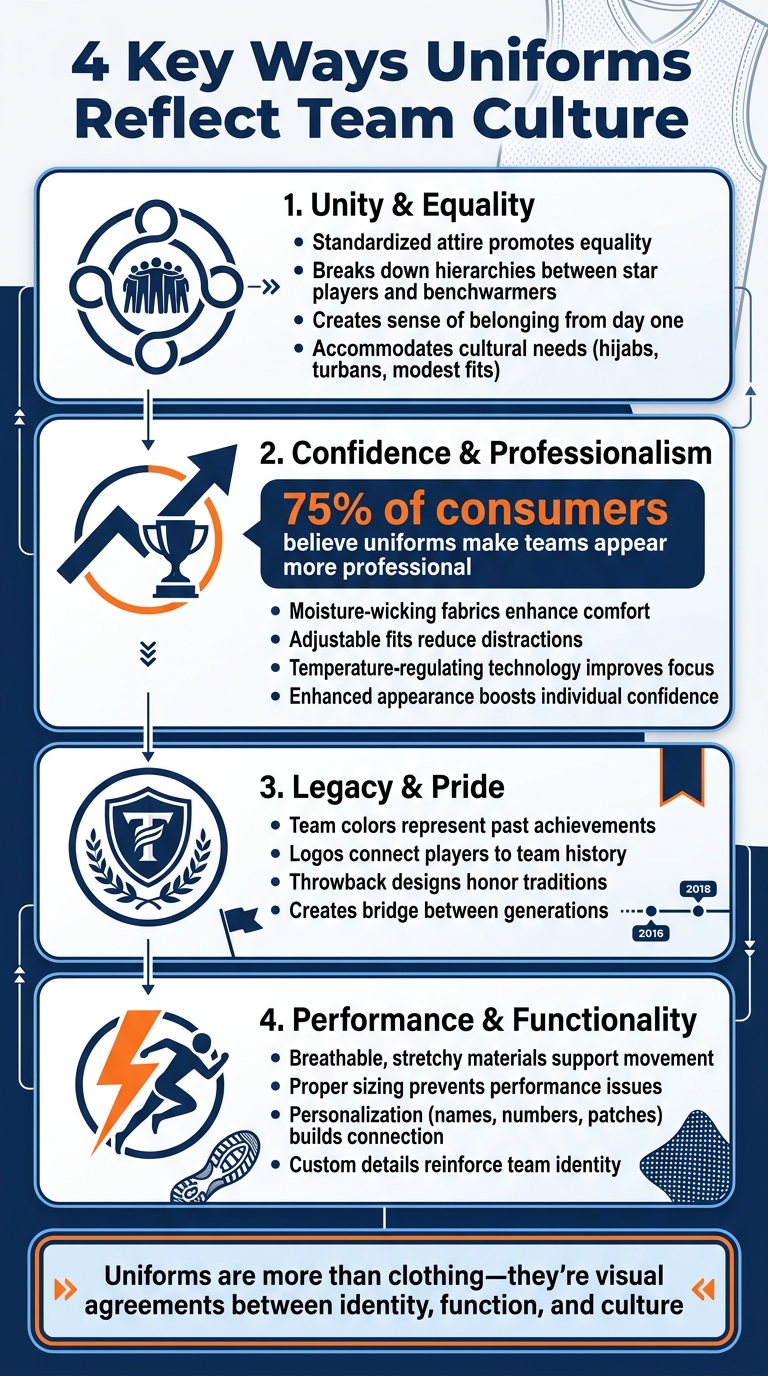
4 Key Ways Uniforms Reflect Team Culture and Identity
Inside Nike’s Sport Research Lab where NFL uniforms are created
sbb-itb-4d95ad3
Benefits of Reflecting Team Culture in Uniform Design
When uniforms reflect a team’s culture, they do more than enhance appearance – they shape team dynamics, from fostering unity to boosting performance and creating a lasting legacy. The impact goes far beyond aesthetics, influencing how team members connect, perform, and carry their shared identity.
Creating Unity and Equality
Uniforms play a key role in breaking down barriers within a team. By wearing the same attire, everyone – whether a star player or a benchwarmer – feels like an equal part of the group. As Arrow Uniforms NZ puts it, "Uniforms flatten perceived hierarchies. From front-line staff to senior team leads, when everyone wears the same smart, functional attire, it reduces feelings of ‘us vs. them.’"
This shared visual identity becomes especially important for new members during onboarding, helping them feel part of the team from day one. For teams spread across different locations or with diverse backgrounds, a standardized look reinforces the idea that every individual plays an essential role in achieving success.
Modern uniform designs take inclusivity even further by accommodating cultural and religious needs. Options like hijabs, turbans, or modest fits ensure that everyone feels respected and included. Sally Roe, Senior Designer at Affinity, emphasizes this, stating, "Offering a choice of accessories, including headwear designed for cultural or even specific hair types, can be used to complete the look and invoke a sense of pride and inclusion within the team."
By promoting equality and inclusion, uniforms lay the groundwork for confidence and professionalism.
Increasing Confidence and Professionalism
A well-designed uniform does more than look good – it enhances how athletes feel and perform. Features like moisture-wicking fabrics, adjustable fits, and temperature-regulating technology ensure comfort during high-pressure situations. These thoughtful details help athletes focus entirely on their game without distractions.
Additionally, uniforms influence how others perceive the team. Research shows that 75% of consumers believe uniforms make employees appear more professional. Sally Roe explains, "The aim is to offer something for all that is easy to wear and comfortable while projecting the required brand image in a distinctive and consistent way."
When athletes feel confident in their gear, it not only improves their performance but also strengthens the emotional bond within the team.
Strengthening Loyalty and Belonging
Uniforms are more than just clothing – they’re symbols of a team’s identity, values, and history. Elements like team colors and logos represent past achievements and traditions, creating a bridge between generations. For players, wearing the uniform fosters a sense of responsibility and commitment to uphold the team’s legacy.
This connection often extends beyond the team to the wider community. Incorporating local or regional elements – such as unique colors or meaningful design details – can inspire pride in both players and fans. Throwback designs, in particular, resonate with long-time supporters while educating newer members about the team’s roots. This shared history strengthens loyalty and deepens the sense of belonging for everyone involved.
Key Elements for Reflecting Team Culture in Uniforms
Creating uniforms that reflect team culture goes beyond aesthetics – it’s about combining visual identity, functionality, and personalization. Together, these elements showcase team values while supporting performance and unity.
Colors, Branding, and Logos
Uniforms act as a team’s visual signature, making a statement at every game, practice, or event. As Kutesmart puts it:
"Your uniforms are a walking billboard for your brand, so they must reflect your company’s values, culture, and visual identity."
Consistency is key. Mismatched colors – like pairing a purple logo with red jerseys – or inconsistent shades can dilute your brand and confuse fans. Stick to a cohesive color palette, and ensure logos, typography, and other design elements are uniformly applied across all pieces. Custom touches, like embroidered trims, custom track jackets, or unique zipper pulls, can subtly reinforce your team’s identity without overcomplicating the design.
Comfort and Performance
The right materials can make or break a uniform. Athletes need gear that supports their movement and keeps them comfortable. As Kutesmart highlights:
"Comfort is non-negotiable – fabrics need to be breathable, stretchy, and soft to keep employees happy and productive all day."
Ill-fitting or uncomfortable uniforms don’t just look bad – they can also hinder performance. To avoid this, offer a variety of sizes and include adjustable features. Conduct wear tests with team members of different body types to identify potential issues before finalizing the design.
Personalization and Recognition
Adding personalized elements, like names, numbers, or achievement patches, creates a sense of individuality within the team. These details help fans connect with specific players while celebrating their contributions. For example, stitching a player’s name or adding achievement badges for captains or milestones can enhance the uniform’s appeal.
The challenge is balancing personalization with overall design consistency. Elements like colors, logos, and typography should remain cohesive, ensuring that individual touches complement rather than clash with the team’s core identity.
How to Work with Designers on Custom Uniforms
Creating custom uniforms is more than just picking colors and slapping on a logo – it’s about transforming your team’s identity into a practical design that works for everyone. As masbadar, Author and Designer, explains:
"A uniform is never just fabric. In the best companies, it becomes a visible agreement between identity, function, and culture."
Initial Concept and Brainstorming
Start by assessing your brand identity. Compare how your team’s current attire measures up to the image you want to project. This helps pinpoint any disconnect between your intended identity and the impression your uniforms create.
Next, define your team’s purpose – your "why." Simon Sinek, Author and Leadership Expert, famously said:
"People do not buy what you do; they buy why you do it."
Share this purpose with your designer. It can guide them in creating visuals that are not only functional but also meaningful. A strong connection between your brand and the design builds a sense of unity and purpose.
Don’t forget inclusivity. From the start, ensure designs work for different body types, climates, and job roles while maintaining a cohesive look.
Prototyping and Feedback
When you receive the initial prototypes, test them in real-world scenarios. Have team members wear the uniforms during regular activities and gather feedback on key aspects like comfort, movement, and suitability for various climates.
Be specific with your feedback. Check if the logo is noticeable but not overwhelming, whether the design supports the physical demands of your team’s tasks, and if it accommodates all body types. A simple checklist can help you systematically evaluate both the practical and branding elements.
Final Approval and Production
Before signing off on the final design, ensure it aligns with your team’s identity, balances branding elements, and offers inclusive sizing. Once approved, plan a thoughtful rollout. Communicate the reasoning behind the design choices to your team – this helps build excitement and reinforces the cultural message behind the uniforms.
Creating Custom Uniforms with Wooter Apparel
Turning your team’s identity into custom uniforms requires a smooth and efficient design and production process. Here’s how Wooter Apparel makes it happen.
Getting Free Custom Designs
Wooter Apparel provides free custom design services to help you create uniforms that truly represent your team. Their platform offers free templates for those who want to design independently, or you can collaborate with their in-house graphic designers who stay on top of the latest sportswear trends. For teams looking for extra professional input, Wooter offers a design package for $49.99, which includes three initial concepts and three revisions. To ensure the best results, submit precise Pantone codes and vector-format logos right from the start. Once the design is finalized, attention shifts to production techniques that combine durability with performance.
Working with Fully Sublimated Products
Wooter uses sublimation printing, a method where designs are dyed directly into the fabric. This allows for unlimited colors and intricate details without additional costs. The result? High-quality uniforms made from quick-dry materials that stand up to game-day performance. With a stellar 4.9/5 rating from 1,366 reviews, Wooter’s commitment to quality is clear. Sublimation printing also sets the foundation for thorough quality checks during the sample review process.
Reviewing Samples and Approving Designs
Before full production begins, Wooter offers a sizing kit with a fully refundable deposit. This ensures your team gets the right fit, as their sizing aligns with industry standards. Once sizing is confirmed, you’ll complete a roster sheet with player names, numbers, and sizes using Wooter’s Excel template. Standard production takes 16 business days, but if you’re in a hurry, rush orders can cut this down to 10 business days for an additional 25% fee. After payment, the uniforms move through sublimation printing, professional stitching, and rigorous quality checks before being shipped directly to you.
Conclusion
A team’s uniform is more than just clothing – it’s a visual statement that ties together identity, function, and shared values. By weaving your team’s colors, branding, and principles into custom designs, you transform a group of individuals into a unified force.
Uniforms go beyond looking good. They inspire confidence, establish a sense of professionalism, and build loyalty. They’re a constant reminder of shared goals and beliefs, especially when they’re designed to be practical, fair, and aligned with the team’s culture. As the Fiveable Content Team puts it:
"Cultural uniformity… can promote understanding and collaboration among different groups by creating common ground".
This alignment paves the way for creating uniforms that not only perform well but also reflect your team’s identity. Wooter Apparel’s seamless process is a great example of this balance. From offering free custom designs to using sublimation printing and conducting thorough quality checks, they ensure every uniform is professional and ready for action. This process embodies the core idea of designing uniforms that strengthen team culture.
Whether you’re designing for a basketball team, soccer club, or football squad, the goal remains the same: capture the spirit of your team. When your uniforms reflect your values and bring people together, they become more than just gear – they’re symbols of unity that leave a lasting impression both on and off the field.
FAQs
How do we define our team culture before designing uniforms?
Before diving into uniform design, it’s crucial to pinpoint the shared values, beliefs, and practices that bring your team together. Ask yourself: What sets your team apart? What are the core principles you want the uniforms to represent? By understanding your team’s identity, you can create a design that not only promotes unity but also highlights the unique spirit of your group.
How can uniforms be inclusive for different body types and beliefs?
Inclusive uniforms focus on ensuring comfort, respect, and representation for every team member. This means providing a range of sizes, adjustable elements, and stretchable fabrics to accommodate different body shapes and needs. To acknowledge and respect cultural or religious practices, designs can incorporate modest options or allow for accessories that align with personal beliefs. By prioritizing thoughtful and flexible designs, teams can foster equality, boost confidence, and create a stronger sense of belonging for everyone.
What should we test in a uniform prototype before ordering?
Before you commit to ordering a uniform prototype, it’s crucial to check a few key details. Start by reviewing the artwork – ensure it’s accurate, the colors match your expectations, and the placement is spot on. Double-check the sizing and style of the garment to make sure it aligns with your specifications.
It’s also a good idea to gather feedback from a test audience. This step can help confirm that the design and fit work well and that the final product will meet your team’s needs. Taking these precautions can save time and ensure the prototype is exactly what you’re looking for.